 AMARAVATI, NOVEMBER 3: Andhra Pradesh Chief Minister N. Chandrababu Naidu stated that the state government machinery worked in close coordination to prevent loss of life and minimise property damage during the successive Arnab and Murasu cyclones. He praised officials and field-level staff for their dedication and teamwork in carrying out relief, rescue and restoration operations.
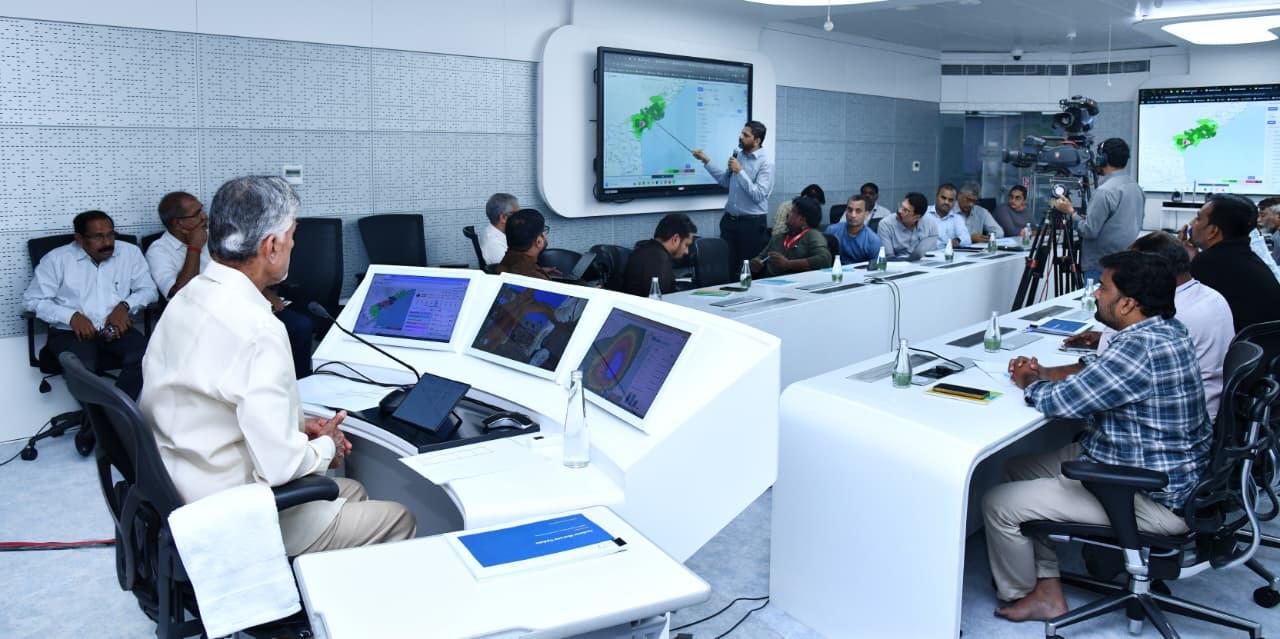
Addressing a press conference at the Real Time Governance Society (RTGS) Centre at the State Secretariat on Tuesday, the Chief Minister explained the measures taken by various government departments to manage the impact of the two cyclones.
Chandrababu Naidu appreciated officials and employees across departments for working around the clock during the emergency. He particularly commended the District Collectors of affected districts for effectively coordinating relief operations as team leaders. He said that everyone, from the Chief Minister’s office to Swarna Ward and Swarna Village staff, worked with a spirit of teamwork.
He emphasised that protecting people’s lives and restoring normalcy in affected areas at the earliest were the government’s primary objectives. He also thanked government officials, field staff and the public for their cooperation.
Focus on Rescue, Relief and Rehabilitation
The Chief Minister said the government gave priority to three key aspects of disaster management: rescue, relief and rehabilitation.
He explained that cyclone movements, wind speeds and rainfall forecasts were continuously monitored to facilitate advance planning. Through RTGS, accurate information was regularly communicated to field-level officials, while data received through the AWARE system was analysed to support timely decision-making.
According to the Chief Minister, forecasts relating to wind speed, rainfall, flood management and water diversion were found to be nearly 90 per cent accurate when compared with ground-level conditions.
Flood-prone villages and cyclone-affected areas were identified in advance, enabling the deployment of necessary personnel and equipment for quicker relief operations.
Power Supply Restored in 4–5 Days Despite Extensive Damage
Chandrababu Naidu said the electricity infrastructure suffered extensive damage across several districts due to the cyclones. However, coordinated efforts enabled the restoration of most of the power supply within just four to five days.
He revealed that approximately 31,000 electricity poles were damaged, while power supply was disrupted in 4,095 villages. Electricity supply was also affected across 548 sub-stations.
The Chief Minister noted that restoring an electricity network affected on such a large scale would normally take at least 20 days. However, through advance planning, coordination and the commitment of electricity department personnel, substantial restoration was completed within four to five days.
He appreciated electricity officials and field staff for working even amid heavy rainfall, clearing fallen trees and installing replacement poles. A large number of drilling machines were deployed to speed up the installation of new poles.
He also mentioned that electricity poles in aquaculture ponds were damaged and thousands of trees were uprooted. Despite difficult conditions, field personnel continued restoration work and helped bring power supply back to normal.
5,000 Pregnant Women Shifted to Hospitals; 1,029 Deliveries Recorded
The Chief Minister said special attention was given to protecting people’s lives and ensuring the availability of essential commodities and medical services in cyclone-affected areas.
Around 5,000 pregnant women from vulnerable areas were identified in advance and shifted to hospitals. He revealed that 1,029 deliveries had taken place during the week.
Medical facilities were arranged to safeguard the health of pregnant women and newborn babies. Medical camps were established, while ambulances, emergency medicines and anti-snake venom were made available.
The government also took measures to maintain sanitation and ensure the supply of safe drinking water, with instructions to officials to prevent the spread of infectious diseases.
He further stated that essential commodities sufficient for two months had been stocked in 19,265 ration shops across 17 districts.
Support Sought from Neighbouring States and Centre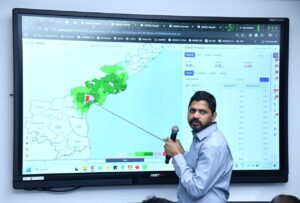
The Chief Minister said the state government sought assistance from neighbouring states to speed up electricity restoration and other relief operations.
Recalling Andhra Pradesh’s earlier assistance to Odisha during cyclone relief operations, he said he had spoken to the Chief Ministers of Tamil Nadu and Karnataka, as well as Telangana Deputy Chief Minister Bhatti Vikramarka, requesting additional personnel to support restoration work in Andhra Pradesh.
He also said the Centre was kept informed about the situation. Union Home Minister Amit Shah had assured the state of the Centre’s support following discussions.
Central teams visited the state to assess the damage caused by Cyclone Arnab. An interim report estimating the damage at ₹4,526 crore had been submitted to the Centre, and a comprehensive report would be sent shortly.
The Chief Minister stated that Cyclone Arnab had damaged agricultural crops across approximately 3.52 lakh hectares and horticultural crops across 23,211 hectares. Preliminary assessments of the damage caused by Cyclone Murasu were also being prepared.
11 TMC of Water Diverted to Reservoirs; 25 TMC Stored in Tanks
Chandrababu Naidu said Andhra Pradesh was facing the combined challenges of cyclones and the impact of El Niño.
He explained that steps had been taken to conserve rainwater received during the cyclones instead of allowing it to go waste. Measures were also implemented to prevent damage to irrigation tanks and divert water to areas where it was needed.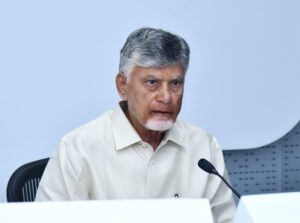
According to the Chief Minister, approximately 11 TMC of water from the two cyclones was diverted into reservoirs, while another 25 TMC was stored in minor irrigation tanks.
Despite receiving rainfall from two successive cyclones, the state continued to face a 28 per cent rainfall deficit. He particularly highlighted the continuing drought conditions in Rayalaseema.
While coastal districts were dealing with cyclone-related challenges, Rayalaseema continued to face drought conditions, he observed.
Permanent Solutions Needed to Address Natural Disasters
The Chief Minister stressed the need to complete priority irrigation projects, including Polavaram, to provide long-term solutions to recurring drought and water-related challenges.
He recalled that the government had earlier prepared a drought management manual with the assistance of retired IAS officer A.V.S. Reddy. Similarly, a disaster management manual was developed with retired IAS officer Tucker following Cyclone Hudhud.
He said a dedicated manual for cyclone management would now be prepared and implemented to strengthen the state’s preparedness for future natural disasters.
The Chief Minister also noted that while a Central team was assessing the damage caused by Cyclone Arnab, another team was conducting field-level assessments of El Niño-related conditions.
The arrival of Cyclone Murasu during the assessment period further highlighted the challenges faced by the state.
Describing the situation as an unprecedented combination of natural disasters, Chandrababu Naidu said he had never witnessed a state facing so many challenges simultaneously.
He reiterated that the government would continue to focus on disaster preparedness, coordinated relief operations, infrastructure restoration and long-term solutions to protect people from future natural calamities.