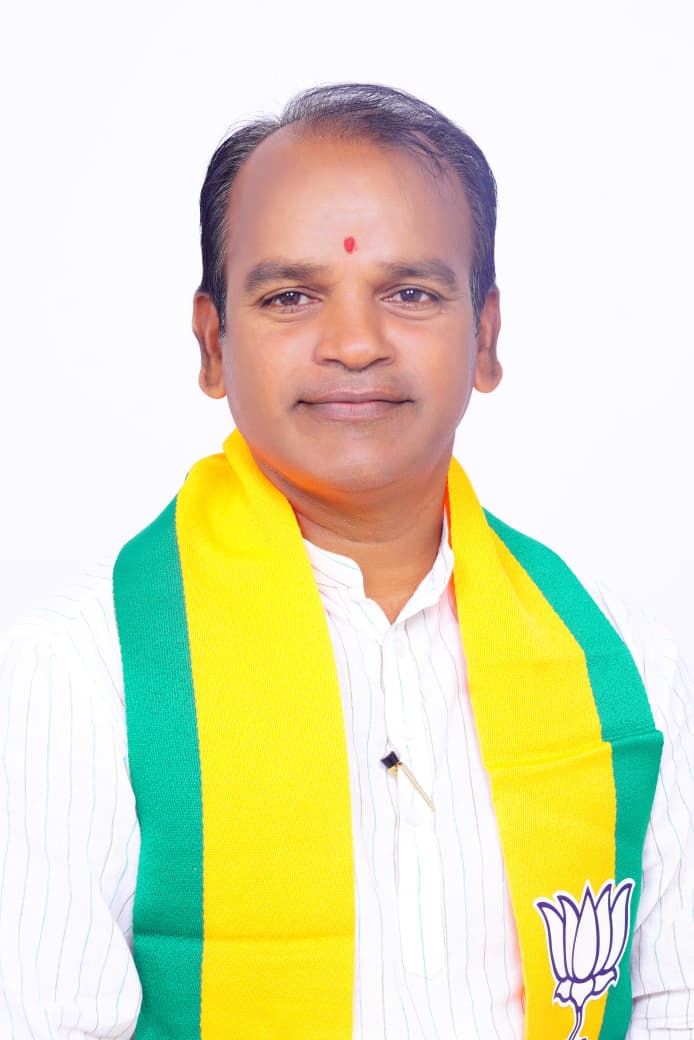
 CityLightBuzz: New Delhi: BJP State Executive Member and Medchal Assembly In-charge Enugu Sudarshan Reddy, who is on a two-day visit to New Delhi, criticized the Opposition for allegedly politicizing the NEET issue instead of working towards resolving students’ concerns.
After observing the protests at Jantar Mantar, Sudarshan Reddy said that the demonstrations appeared to be dominated by leaders of the Congress, Aam Aadmi Party (AAP), and the INDIA alliance, rather than students. He alleged that the Opposition’s primary objective was to target the Central Government rather than safeguard students’ interests.
He further claimed that certain anti-Sanatana Dharma and anti-national elements were attempting to spread misinformation by linking every issue to Sanatana Dharma and the Rashtriya Swayamsevak Sangh (RSS), with the intention of creating divisions in society. He asserted that the people of the country have consistently rejected such attempts.
Highlighting the Centre’s measures to ensure fairness in public examinations, Sudarshan Reddy said that under the leadership of Prime Minister Narendra Modi, the Government enacted the Public Examinations (Prevention of Unfair Means) Act to curb examination malpractices. He noted that the law provides for imprisonment ranging from five to ten years and fines between ₹1 crore and ₹10 crore for those involved in paper leaks and other examination-related offences.
He also stated that although the Central Government is prepared to hold a comprehensive discussion on the NEET issue in Parliament, the Congress and other INDIA alliance parties were allegedly disrupting the proceedings instead of allowing a meaningful debate.
Reaffirming the BJP’s commitment to protecting students’ interests and ensuring transparency in the education system, Sudarshan Reddy urged Opposition parties to refrain from “cheap politics” and instead offer constructive suggestions for the welfare of students. He expressed confidence that under Prime Minister Narendra Modi’s leadership, the country would continue implementing transparent governance, corruption-free examination systems, and strong reforms in the education sector.